Understanding Edge Computing
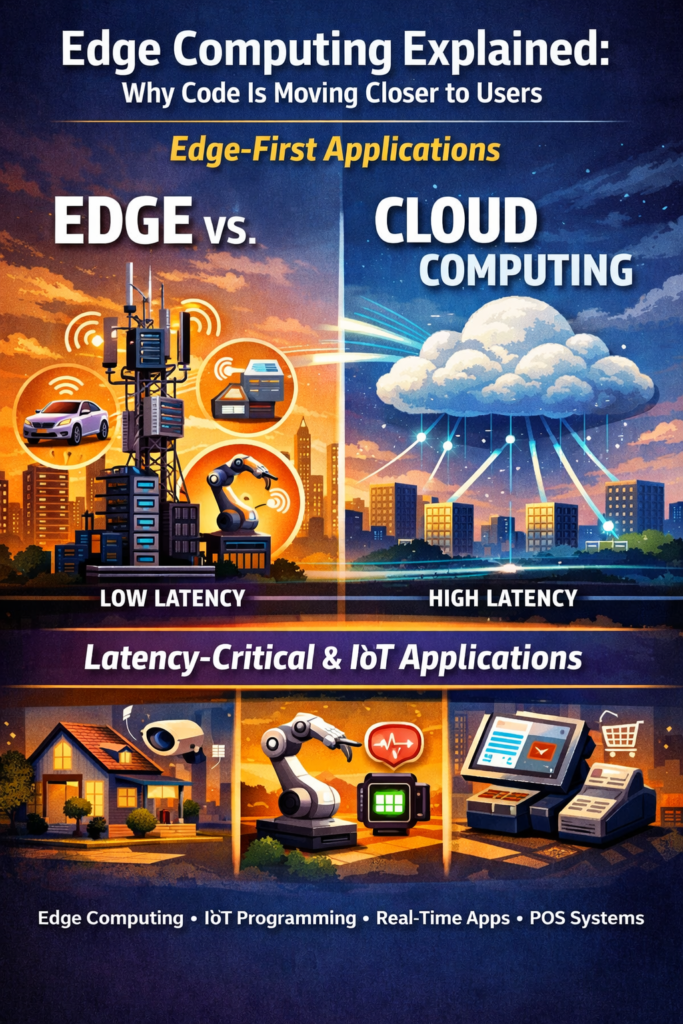
Edge computing is a technology paradigm that emphasizes the processing of data closer to its source rather than relying on a centralized data center. This shift is particularly significant given the proliferation of IoT devices and the increasing volume of data generated at the edge of networks. By performing computations locally, edge computing enhances efficiency and reduces the latency often associated with data transmission to distant servers. In scenarios requiring real-time processing capabilities, such as autonomous driving or smart manufacturing, the speed of data processing can be critical, and edge computing provides a streamlined solution.
Unlike traditional cloud computing, where data is sent to centralized servers for processing, edge computing places computation resources nearer to devices, which can lead to faster insights and responses. The edge architecture allows for local decision-making, which is essential in applications where immediate action is necessary. For instance, in healthcare, wearable devices can monitor vital signs and alert professionals without delay by processing data on-site.
This approach also complements cloud computing rather than replacing it. Both architectures play a pivotal role in today’s digital transformation. While cloud services offer significant storage and computing power for vast datasets and complex analysis, edge computing manages the data processed on the device level. By distributing workloads across both edge and cloud, organizations can optimize performance and resource allocation, thus ensuring high availability and reliability of services.
In conclusion, edge computing represents a significant advancement in how data is handled and processed. As industries continue to evolve with increased reliance on real-time data and analytics, the ability to execute tasks at the edge is becoming increasingly important to maintain competitive advantage and foster innovation.
The Emergence of Edge-First Applications
In recent years, the rise of edge computing has given birth to a new category of software solutions known as edge-first applications. These applications are designed with the underlying principle of utilizing resources at the edge of the network, closer to where users engage with the application. This shift is becoming increasingly important for developers and businesses alike, as it can lead to significant improvements in performance, reliability, and overall user experience.
Edge-first applications leverage the distributed nature of edge computing architectures to minimize latency, which is especially critical for real-time applications. For instance, in the internet of things (IoT) space, edge-first applications can process data right at the point of collection, reducing the time required for data transmission to centralized servers. This enhanced speed not only boosts performance but also enables responsive decision-making, a crucial factor in environments such as smart manufacturing and autonomous vehicles.
Moreover, edge-first applications improve reliability by decreasing dependency on centralized cloud services. In retail, for example, point-of-sale solutions and inventory management systems that operate at the network edge can continue functioning even during internet outages, ensuring that businesses can maintain operations without disruption. This resilience is becoming increasingly vital as companies strive for uninterrupted service delivery in competitive marketplaces.
Real-world examples further illustrate the impact of edge-first applications. In gaming, platforms such as cloud gaming services utilize edge computing to provide seamless experiences by processing game data closer to the user, thereby reducing lag. Similarly, in the healthcare sector, telemedicine applications are employing edge-first principles to analyze patient data in real-time, leading to faster diagnosis and treatment plans. The consistent theme across these sectors is the enhancement of user experiences through improved speed and reliability.
Latency-Critical Applications and the Role of Edge Computing
Latency-critical applications are increasingly becoming integral to various industries, particularly as the demand for instantaneous data processing and response intensifies. The Internet of Things (IoT) devices, real-time data analytics, and point-of-sale (POS) systems exemplify the types of applications that necessitate the deployment of edge computing solutions. These applications are characterized by the requirement for minimal latency, as delays can significantly affect user experience and operational efficiency.
In the case of IoT devices, which often operate in environments requiring immediate feedback, any latency in data transmission can lead to adverse outcomes. For instance, industrial IoT devices gathering data on machinery performance must transmit that information in real-time to avoid failures or critical downtime. Edge computing addresses this need by processing data closer to where it is generated, thereby reducing the time taken for data to travel to a central server.
Another example lies in real-time data analytics, where businesses rely heavily on timely insights to inform decisions. Traditional cloud computing approaches may introduce latency that hinders the responsiveness of analytics platforms. Conversely, edge computing mitigates these issues by facilitating data processing at the source—whether that be a sensor, a video feed, or a transactional point—enabling businesses to act swiftly on real-time insights.
Moreover, POS systems in retail environments require immediate transaction processing to enhance customer satisfaction. A delay in processing a customer’s payment can lead to frustration and, ultimately, a loss of sales. With edge computing, transaction data can be processed locally, ensuring a smooth and immediate checkout experience.
In summary, edge computing is specifically designed to meet the demands of latency-critical applications by enabling rapid data processing at the source, enhancing user experiences and optimizing operational efficiency across various industries.
The Future of Edge Computing: Trends and Predictions
As the digital landscape continues to evolve, the future of edge computing promises to be transformative, with several key trends and predictions shaping its development. One prominent trend is the advancement of hardware specifically tailored for edge computing. This includes the development of more powerful, energy-efficient edge devices, which can process data closer to its source. These innovations are essential as the demand for real-time processing and immediate data insights grows within industries ranging from healthcare to manufacturing.
Alongside hardware developments, the integration of artificial intelligence (AI) and machine learning (ML) into edge computing is gaining traction. These technologies enhance the capabilities of edge devices, enabling them to learn from data patterns on-site and make decisions autonomously. This synergy between AI, ML, and edge computing is expected to facilitate smarter applications, such as proactive maintenance in industrial equipment and enhanced customer experiences in retail environments.
Furthermore, edge computing is anticipated to play a vital role in the expansion of the Internet of Things (IoT). As more devices are interconnected, processing data at the edge will reduce latency and bandwidth usage while enhancing the overall performance of IoT systems. This could lead to unprecedented efficiencies in numerous fields, including smart cities and connected vehicles.
However, organizations must also navigate several challenges as they embrace edge-first strategies. Security is a prominent concern, given that edge devices may be more vulnerable to cyber threats than their centralized counterparts. Additionally, managing diverse edge architectures can complicate deployment and operations, necessitating robust governance frameworks. Thus, while the outlook for edge computing is promising, organizations must strategically address these challenges to harness its full potential.